Building Automated Affiliate Income Streams With AI and SEO
Why Automated Affiliate Income Is More Realistic Now Than Ever
I have been involved in affiliate marketing for over a decade. For most of that time, the standard advice was to pick a niche, build a website yourself, write hundreds of product reviews, and hope Google eventually sent traffic. That approach worked, but it demanded months of effort before you saw any real passive income. The game has changed. With modern tools, especially AI and smarter SEO strategies, you can set up systems that generate automated affiliate income without needing to be a tech wizard or a social media influencer.
The core idea is simple. Instead of manually creating every page and chasing backlinks one by one, you use software and structured processes to build niche websites that attract search engine traffic on autopilot. This is not about spam or shortcuts. It is about using technology to handle the repetitive parts so you can focus on strategy and content quality. When done right, the result is a portfolio of sites that earn commissions from programs like Amazon Associates or ClickBank while you sleep.
What Actually Makes Affiliate Income "Automated"
Automated affiliate income means you have systems in place that handle the heavy lifting of content creation, keyword research, site architecture, and even basic promotion. The human role shifts to oversight, refinement, and occasionally stepping in when something needs a personal touch. For example, you might use a content management system like WordPress combined with AI writing assistants to produce articles around long-tail keywords that have clear user intent. These are the queries people type when they are ready to buy or compare products, such as "best wireless mouse for programming" or "Shopify vs WooCommerce for digital downloads."
The real trick is combining AI with disciplined SEO. You feed the AI your keyword research from tools like Ahrefs, instruct it to write for a specific audience, and then publish through a well-organized site structure. Google rewards sites that answer questions thoroughly. If your content matches what searchers want, you will see your search engine rankings improve over time. That traffic converts because it comes from people already looking for solutions.
Choosing the Right Niches and Programs
Not every niche is suitable for an automated model. High-competition topics like "health insurance" or "credit cards" require authority and trust that take years to build. Better targets are smaller niches with passionate audiences and decent commission rates. Think about reviewing tools for a specific hobby, comparing software for a particular business task, or curating products for a lifestyle segment. Programs like Amazon Associates work well for physical products because the commission structure is straightforward and the conversion rates are solid. For digital goods, ClickBank offers higher payouts per sale, especially in information products and online courses.

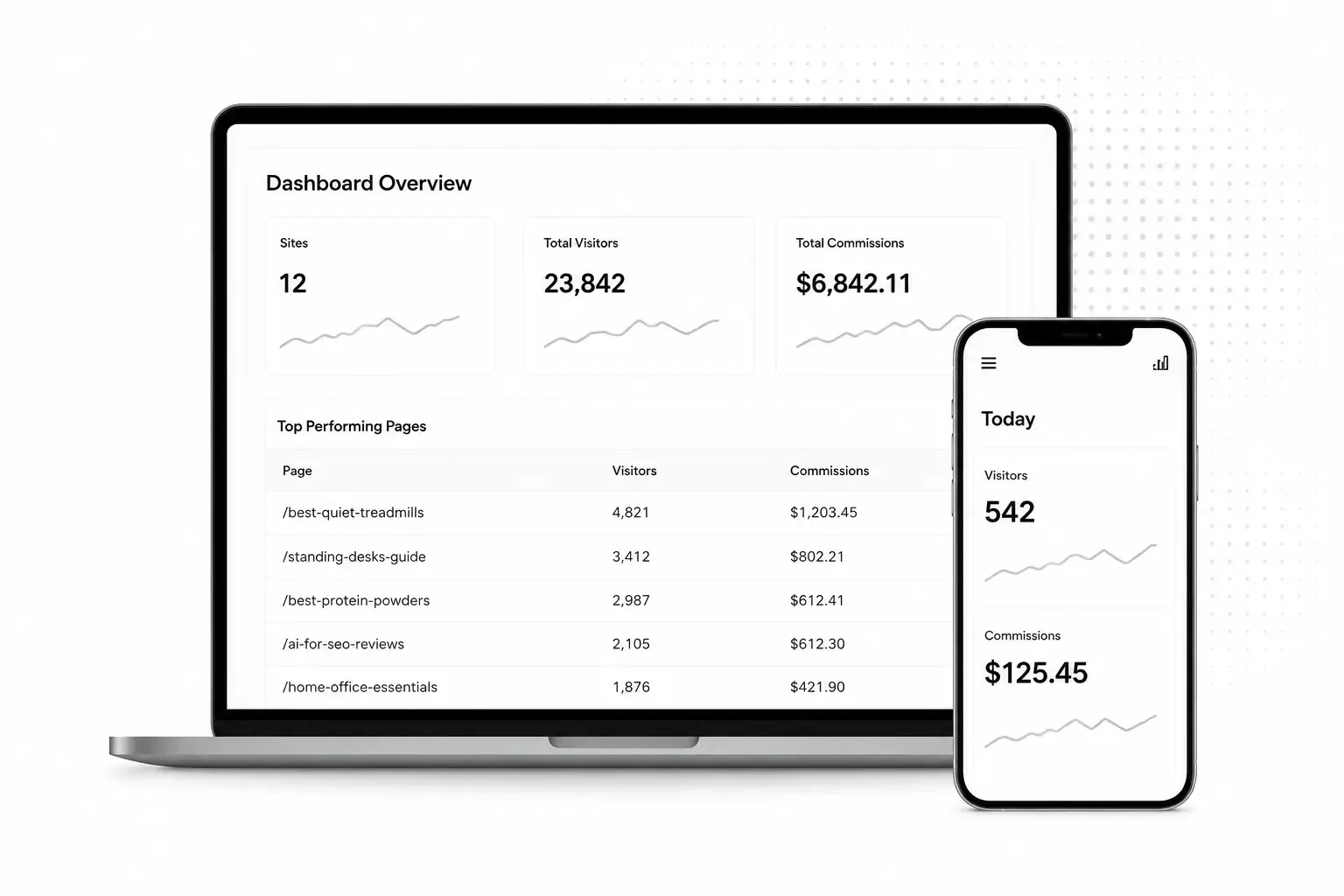
When I started my first automated site, I picked a niche in home office ergonomics. I used Ahrefs to find long-tail keywords like "adjustable standing desk for tall people" and "best ergonomic chair under 300." Each article targeted one specific keyword. The AI generated the first draft, and I spent about 15 minutes per post polishing facts and adding personal observations. Within six months, that site was earning steady automated affiliate income from Amazon Associates. It was not a fortune, but it covered hosting costs and then some, with zero ongoing effort after the initial setup.
The Role of AI in Content Production
AI has become a legitimate assistant for affiliate marketers. It can research topics, outline articles, and even write full drafts that sound human if you give it good instructions. The key is to treat AI as a junior writer you supervise, not a magic box. You still need to verify facts, add your own experience, and ensure the content matches user intent. Google Search Console is invaluable here. It shows you which queries bring traffic and how people interact with your pages. If you see high impressions but low clicks, your title or snippet might be weak. If users bounce quickly, your content might not match what they expected.
One mistake I see beginners make is publishing AI-generated articles without editing. Google can detect thin or generic content, and it will not rank well. The sites that succeed use AI to speed up production, not replace human judgment. They also build authority by earning backlinks from related sites. Automated affiliate income is not purely passive in the early stages. You have to invest time in outreach, guest posting, or creating linkable assets like original research or detailed guides.
Site Architecture and SEO Fundamentals
A solid site architecture helps Google understand your site and crawl it efficiently. Use a clear hierarchy: category pages for broad topics, then individual articles for specific keywords. Internal links between related posts spread authority and keep visitors engaged. For example, if you have a post about "best running shoes for flat feet," link it to your main running shoes category and to other articles about foot care or shoe maintenance.
WordPress remains the most practical content management system for this kind of project. It is flexible, has thousands of plugins, and handles SEO basics well with a plugin like Yoast or Rank Math. You can also integrate analytics tools, manage multiple authors (including AI), and schedule posts in advance. The goal is to create a system where new content goes live regularly without you logging in every day.
Authority and Backlinks Still Matter
No amount of automation will replace the need for authority. Google uses authority score as a ranking signal. You build it by earning backlinks from reputable sites in your niche. For new niche websites, the fastest way is to create something worth linking to: a comprehensive guide, a data study, or a free tool. Then reach out to bloggers and journalists who cover that topic. This is the part of the process that cannot be fully automated, but you can systematize it. Keep a spreadsheet of prospects, track your outreach, and follow up after a week.
Another tactic is to write guest posts for established sites in your niche. Include a link back to one of your articles. Over time, these backlinks compound, lifting your entire site's authority. Automated affiliate income becomes more stable as your authority grows, because you depend less on ranking for a single keyword and more on a broad base of traffic.
Balancing Automation With Human Oversight
There is a temptation to set everything on autopilot and forget about it. That rarely works long term. Google updates its algorithm, search trends shift, and competitors emerge. You need to check Google Search Console at least once a month. Look for pages that lost rankings and figure out why. Maybe a competitor wrote a better article, or your content became outdated. Update those pages with fresh information, better examples, or improved formatting. This maintenance keeps your automated affiliate income flowing.
I also recommend keeping a personal touch in your content. Even if AI writes the first draft, add a sentence or two about your own experience with the product. Readers trust real opinions. That trust converts into clicks and commissions. Systems that rely purely on generic AI copy tend to have lower conversion rates because they lack authenticity.
Practical Steps to Get Started
If you want to build an automated affiliate income stream, here is a simple workflow that has worked for me and others:

- Pick a niche with decent commission rates and low to medium competition. Use Ahrefs or a similar tool to check keyword difficulty.
- Set up a WordPress site with a clean theme and solid site architecture. Include a sitemap and fast hosting.
- Do keyword research focused on long-tail keywords with clear user intent. Aim for 20 to 50 keywords to start.
- Use AI to draft articles around those keywords. Spend 10 to 15 minutes per post editing for accuracy and voice.
- Build backlinks through outreach, guest posting, or creating a shareable resource. Track progress in Google Search Console.
The first site might take three to six months to show real passive income. But once it does, you can replicate the process for other niches. Over time, you build a portfolio of sites that together generate a meaningful monthly income with minimal ongoing work.
Final Thoughts on Sustainability
Automated affiliate income is not a get-rich-quick scheme. It is a legitimate way to build wealth through smart use of technology and SEO. The people who succeed are the ones who treat it like a business, not a lottery. They invest in quality content, monitor their metrics, and adapt to changes. They also recognize that automation handles the routine, but human judgment drives the strategy. If you are willing to put in the upfront work, the long-term payoff is a stream of income that keeps flowing even when you are not actively working on the sites.